The night sky has always been a source of wonder and mystery, a canvas upon which humanity has projected its dreams, fears, and questions about the universe. Among the most intriguing possibilities is the idea that extraterrestrial civilizations might choose to communicate with us through the stars—specifically, through the constellations that have guided human imagination for millennia. Could these celestial patterns serve as more than just navigational aids or mythological symbols? Could they be the interstellar equivalent of a handshake, a way for advanced beings to signal their presence to us?
For centuries, cultures across the globe have ascribed meaning to the constellations. The Greeks saw heroes and monsters in the stars, while Indigenous peoples of the Americas and Australia wove intricate stories about the celestial figures. These shared myths suggest a universal human tendency to seek patterns and narratives in the cosmos. But what if these patterns were intentionally placed—or at least recognized—by other intelligent life forms? The notion that aliens might use constellations as a form of communication is not as far-fetched as it might seem. After all, if we were to send a message across the vastness of space, we would likely use something universal, something that transcends language and culture. The stars, unchanging over human timescales, fit that description perfectly.
One compelling theory posits that advanced civilizations might manipulate starlight to create detectable anomalies within familiar constellations. Imagine a scenario where the stars of Orion’s Belt suddenly dim or brighten in a precise, mathematical sequence. Such an event would be impossible to dismiss as a natural phenomenon, and it would immediately capture the attention of astronomers worldwide. This method of communication leverages the fact that constellations are easily recognizable and stable over long periods, making them ideal for interstellar messaging. If extraterrestrials wanted to announce their presence, altering the appearance of a well-known constellation would be an effective way to do so.
Another possibility is that aliens might use constellations as a kind of cosmic map, pointing the way to their homeworld or to a meeting place. Ancient astronaut theorists have long speculated that certain star alignments in megalithic structures like Stonehenge or the pyramids of Giza could be attempts to encode such information. If true, this would imply that the idea of using constellations as a communication tool is not new—it might have been understood by early human civilizations, even if only fragmentarily. Modern SETI (Search for Extraterrestrial Intelligence) efforts could take a cue from this approach, focusing not just on radio signals but also on anomalous stellar behavior within specific constellations.
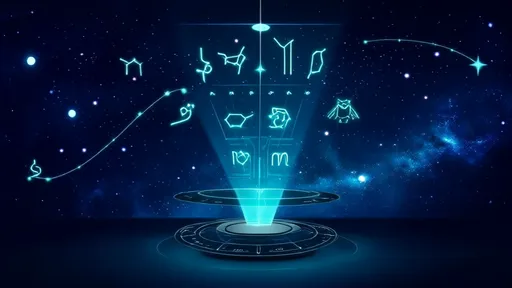
The concept of zodiac signs adds another layer to this discussion. Astrology, though not scientifically validated, has persisted for thousands of years as a system linking human personality and destiny to the positions of celestial bodies. Could there be a deeper, perhaps even extraterrestrial, reason for this enduring belief? Some researchers speculate that the zodiac might be a coded message, with each sign representing a different aspect of an alien civilization’s history or philosophy. Alternatively, the zodiac could serve as a galactic calendar, marking significant events or cycles that are meaningful to advanced beings. While this idea ventures into speculative territory, it underscores the broader point: the stars have always been a medium for storytelling, and it’s not unreasonable to think that others might be using them to tell their stories too.
Skeptics, of course, will argue that there is no concrete evidence to support the idea of constellation-based alien communication. They might point out that the stars we see are scattered across vast distances and are not physically connected, making it unlikely that any civilization could manipulate them in a coordinated way. However, this objection assumes that extraterrestrial technology operates within the same limits as our own. A society capable of interstellar travel or communication might have methods of influencing starlight that we cannot yet imagine. Moreover, the absence of evidence is not evidence of absence; the sheer scale of the universe means we have only begun to scratch the surface of what might be possible.
In recent years, there have been sporadic reports of unusual celestial phenomena that defy easy explanation. Unexplained flashes of light in the night sky, stars that appear to vanish without a trace, and strange, repetitive signals from deep space—all of these could be potential candidates for further investigation. While most of these events likely have natural causes, a handful remain enigmatic enough to warrant consideration as possible attempts at contact. The challenge lies in distinguishing between random cosmic noise and intentional signals, a task that requires both scientific rigor and an open mind.
If constellations are indeed being used as a communication medium, the next question is: what are they trying to tell us? The answer might not be a straightforward message but rather a test of our ability to recognize and decode complex patterns. Advanced civilizations might be less interested in broadcasting their presence outright and more in observing whether we are capable of joining the galactic conversation. In this sense, the search for extraterrestrial intelligence becomes not just a scientific endeavor but a developmental milestone for humanity. Proving that we can understand and respond to cosmic signals would mark our transition from an isolated species to a participant in a larger interstellar community.
The implications of such a discovery would be profound. Confirmation that aliens are using constellations to communicate would revolutionize our understanding of the universe and our place within it. It would suggest that the cosmos is not a silent, empty void but a vibrant network of civilizations, each with its own way of reaching out across the light-years. This realization could unite humanity in a way nothing else has, giving us a shared purpose and a common identity as citizens of the galaxy. At the same time, it would raise urgent questions about how to respond and what kind of relationships we might forge with these distant beings.
For now, the idea of constellation-based alien contact remains in the realm of speculation. But as our technology improves and our understanding of the cosmos deepens, it’s a possibility that deserves serious consideration. The stars have always been our silent companions, guiding us through the ages. Perhaps one day, they will speak—and we will finally hear what they have to say.

By /Jul 21, 2025

By /Jul 21, 2025

By /Jul 21, 2025

By /Jul 21, 2025

By /Jul 21, 2025

By /Jul 21, 2025
By /Jul 21, 2025
By /Jul 21, 2025

By /Jul 21, 2025
By /Jul 21, 2025

By /Jul 21, 2025

By /Jul 21, 2025

By /Jul 21, 2025
By /Jul 21, 2025

By /Jul 21, 2025

By /Jul 21, 2025

By /Jul 21, 2025
By /Jul 21, 2025

By /Jul 21, 2025

By /Jul 21, 2025