In the ever-evolving landscape of neuroscience and personal technology, a fascinating concept has emerged at the intersection of memory preservation and celestial inspiration – Memory Capsule Constellations. This innovative approach to organizing and visualizing our most precious memories combines cutting-edge biotechnology with the timeless wonder of star patterns.
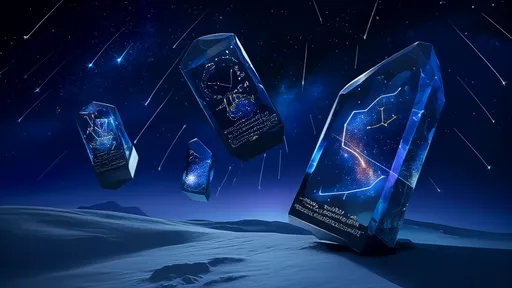
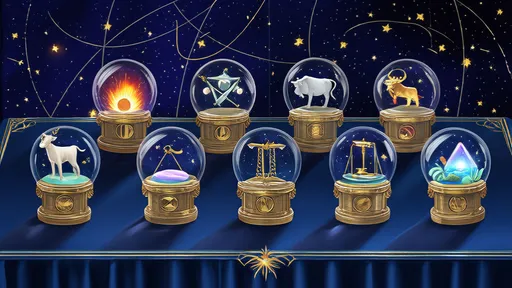
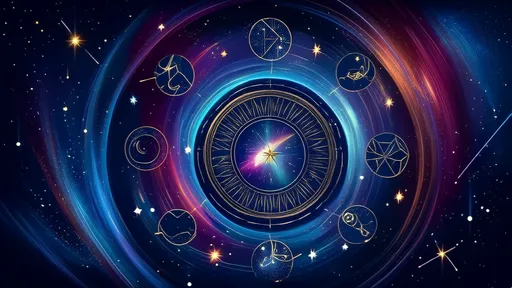
The fundamental premise revolves around transforming individual memory capsules – digital or biochemically preserved neural imprints of specific experiences – into a navigable constellation map. Each significant life event becomes a luminous point in this personal cosmos, with relationships between memories represented as celestial connections. The brighter the memory's emotional resonance, the more intensely its corresponding star burns in this intimate universe of recollection.
How Memory Constellations Form
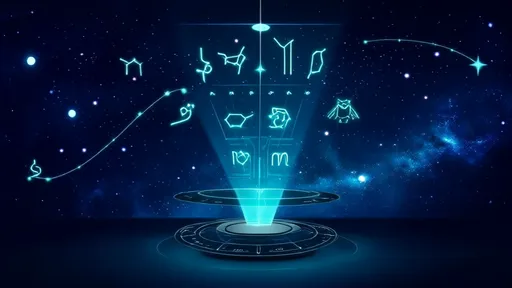
Neuroscientists working on memory digitization discovered that when subjects recalled related memories in sequence, their brain activity patterns formed recognizable neural pathways resembling cosmic filaments. This observation sparked the idea that our memory networks might naturally organize themselves in patterns analogous to stellar formations. Advanced machine learning algorithms now map these neural pathways, translating them into three-dimensional constellations visible through specialized interfaces or augmented reality displays.
The process begins with memory capture through various means – from traditional journaling and photo preservation to more advanced methods like neural recording during significant life events. These memory capsules are then analyzed for emotional content, thematic elements, and chronological relationships. The system identifies natural clusters of related memories, much like stars forming distinct constellations through gravitational relationships.
Personal Mythology in the Stars
What makes this approach particularly compelling is how it allows individuals to develop their own personal mythology through these memory constellations. Just as ancient civilizations saw gods and heroes in star patterns, people begin recognizing shapes and narratives in their memory maps. A cluster of childhood memories might form a distinct shape the user interprets as "The Explorer," while romantic milestones coalesce into "The Lovers' Bridge."
Therapeutic applications have shown remarkable promise. Patients working through trauma can physically distance painful memories within their constellation while strengthening positive connections. The visual representation helps them contextualize difficult experiences as part of a larger, balanced cosmos of their life story rather than overwhelming singular events.
Technological Celestial Navigation
Modern memory constellation interfaces draw inspiration from ancient celestial navigation techniques. Users can "set sail" through their memory cosmos using gesture controls or thought commands (for neural-linked systems). Zooming in on a particular memory-star reveals associated sensory details – the scent of rain during a first kiss, the texture of a childhood blanket, or the melody playing during a career triumph.
Advanced systems incorporate gravitational principles where frequently visited memories gain mass, subtly bending the spacetime of the constellation. This creates natural pathways between often-recalled experiences while allowing seldom-visited but important memories to maintain their positions as distant stars waiting to be rediscovered.
Interpersonal Constellations
The concept expands beautifully into shared experiences. Couples can merge compatible memory constellations at points of intersection, creating binary star systems where both partners' perspectives of the same event orbit each other. Family constellations show generational patterns, with parents' and children's memory stars forming distinct but gravitationally bound galaxies.
Group constellations have emerged as a powerful tool for team building and historical preservation. Companies map their organizational journey through milestone constellations, while communities create collective memory maps of significant local events. These shared constellations become living documents that evolve as new participants add their perspectives.
Preservation Across Generations
One of the most profound applications lies in multigenerational memory preservation. As constellations pass to descendants, they don't remain static displays but evolve into interactive family histories. Younger generations can "activate" ancestral memory stars, experiencing key moments from their forebears' lives with remarkable sensory fidelity. This creates an unprecedented form of emotional time travel, where great-grandchildren can understand historical events through their ancestors' personal experiences rather than textbook accounts.
The constellations adapt to each new viewer, highlighting connections most relevant to the current generation while maintaining the integrity of original memories. This dynamic preservation raises fascinating questions about collective identity and the nature of inherited experience.
Ethical Considerations in Memory Cosmos
As with any powerful technology, memory constellations present important ethical questions. Who controls access to shared memory stars after a relationship ends? How do we handle constellations when memories conflict between participants? The field has developed "memory diplomacy" protocols to negotiate these sensitive situations, often creating dual-perspective binary stars when consensus can't be reached.
Privacy settings in memory constellations have become remarkably sophisticated. Certain stars might be visible to all, while others require specific emotional clearance to access. Some memories remain private planets with thick atmospheres, their contents obscured but their presence acknowledged in the overall structure.
The Future of Memory Astronomy
Researchers are working on expanding the sensory dimensions of memory stars. Early experiments allow certain memories to emit characteristic "scent waves" or "temperature pulses" when activated. There's also development toward memory supernovae – transformative life events that redistribute surrounding memories into new patterns, much like stellar explosions seed space with elements for new star formation.
The most ambitious projects aim to create a true Memory Milky Way – an interconnected network of individual constellations that could theoretically map the collective human experience. While this raises obvious technical and philosophical challenges, even small-scale experiments show how patterns emerge when constellations connect, suggesting there may indeed be universal shapes to human experience that transcend individual lives.
As we stand at the dawn of this new era of memory exploration, Memory Capsule Constellations offer more than just an organizational system for our past. They provide a framework for understanding our lives as cosmic journeys, where every experience – joyful or painful – finds its place in the grand design. Like ancient mariners navigating by the stars, we're learning to chart our emotional trajectories through personal galaxies of meaning, discovering that our memories were never isolated fragments, but always part of a greater constellation waiting to be seen in its full luminous glory.
By /Jul 21, 2025
By /Jul 21, 2025
By /Jul 21, 2025
By /Jul 21, 2025

By /Jul 21, 2025
By /Jul 21, 2025
By /Jul 21, 2025
By /Jul 21, 2025

By /Jul 21, 2025
By /Jul 21, 2025

By /Jul 21, 2025
By /Jul 21, 2025
By /Jul 21, 2025
By /Jul 21, 2025
By /Jul 21, 2025

By /Jul 21, 2025
By /Jul 21, 2025
By /Jul 21, 2025
By /Jul 21, 2025
By /Jul 21, 2025