In a groundbreaking advancement for precision measurement technology, researchers have developed a mobile laboratory equipped with cold atom interferometers capable of detecting minute gravitational anomalies. This innovation promises to revolutionize fields ranging from geophysical exploration to fundamental physics research, offering unprecedented sensitivity in measuring variations in Earth's gravitational field.
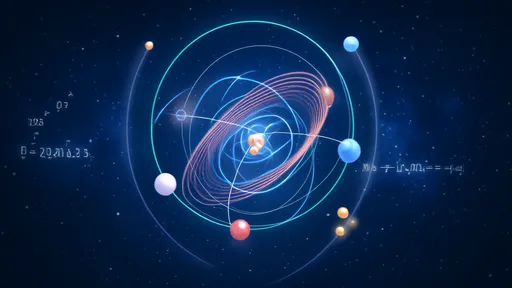
The core of this portable system relies on laser-cooled atoms suspended in vacuum chambers, where quantum interference patterns reveal subtle changes in gravitational acceleration. Unlike traditional gravimeters limited by mechanical components, these atomic sensors exploit wave-particle duality at temperatures near absolute zero. By manipulating rubidium or cesium atoms with precisely tuned lasers, scientists can create interference fringes sensitive enough to detect underground density variations or hidden geological structures.
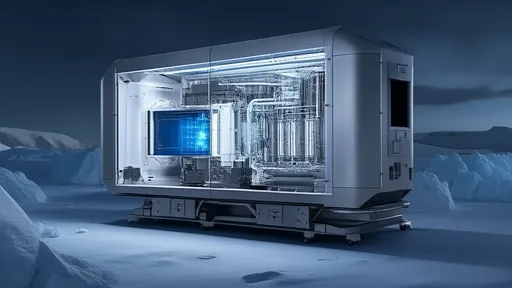
What sets this development apart is its operational mobility. Previous cold atom interferometers required vibration-isolated underground facilities, but the new compact design incorporates advanced damping systems and modular components that allow deployment in field conditions. The apparatus fits within a standard shipping container, enabling transportation to remote locations for mineral prospecting or volcanic monitoring. Early field tests in the Himalayas successfully mapped previously undetectable magma chambers beneath active volcanoes using nothing but gravitational signatures.
The technical achievement lies in maintaining quantum coherence during movement. Researchers solved this through a combination of real-time compensation algorithms and a novel magnetic shielding approach that preserves atomic superposition states despite vehicle vibrations. This breakthrough effectively brings laboratory-grade quantum precision to moving platforms, opening possibilities for airborne and marine gravimetric surveys with centimeter-scale spatial resolution.
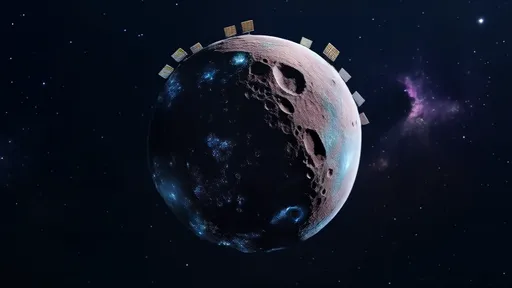
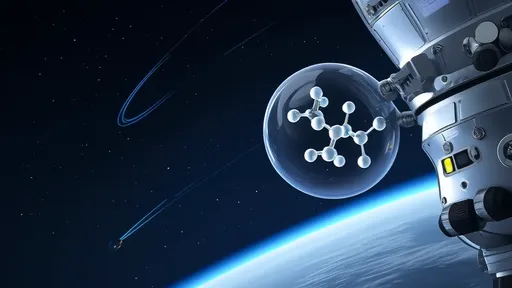
Beyond terrestrial applications, the technology demonstrates potential for space-based missions. Modified versions could detect gravitational waves or measure planetary gravity fields during orbital missions. The European Space Agency has expressed interest in adapting the system for lunar gravimetry to study the Moon's subsurface lava tubes - potential habitats for future colonies.
Industrial adoption is already underway, with several oil majors commissioning custom units for salt dome mapping. The military sector sees applications in submarine detection, as nuclear vessels create measurable gravitational disturbances. However, the researchers emphasize civilian benefits, particularly in earthquake precursor detection and groundwater monitoring for drought-prone regions.
Challenges remain in reducing power consumption and simplifying operation for non-specialist users. Current prototypes require trained physicists for calibration, though automation efforts aim to make the technology accessible to geologists and surveyors. The team anticipates commercial availability within five years, potentially transforming resource exploration and disaster prevention through quantum-enhanced gravitational vision.
This mobile quantum gravimeter represents a convergence of fundamental physics and practical engineering. By harnessing the bizarre properties of ultracold atoms outside laboratory confines, scientists have created what some call a "gravity microscope" - revealing hidden aspects of our planet through the precise measurement of spacetime curvature at microscopic scales. As refinement continues, such devices may uncover everything from untapped mineral deposits to early warnings of seismic shifts, all by tracking how atoms fall through space.
By /Jul 18, 2025
By /Jul 18, 2025
By /Jul 18, 2025

By /Jul 18, 2025

By /Jul 18, 2025
By /Jul 18, 2025
By /Jul 18, 2025
By /Jul 18, 2025
By /Jul 18, 2025
By /Jul 18, 2025
By /Jul 18, 2025
By /Jul 18, 2025

By /Jul 18, 2025
By /Jul 18, 2025

By /Jul 18, 2025
By /Jul 18, 2025
By /Jul 18, 2025
By /Jul 18, 2025
By /Jul 18, 2025
By /Jul 18, 2025