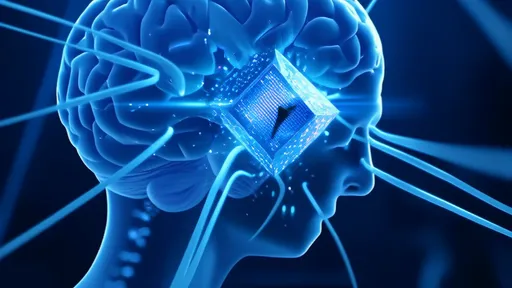
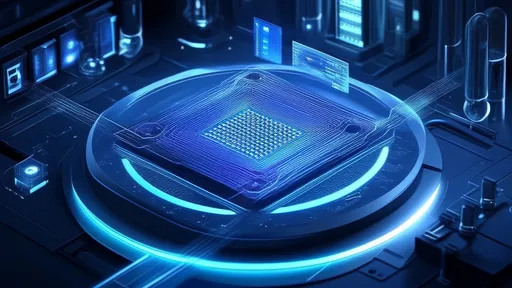
In the rapidly evolving field of quantum computing, researchers are constantly pushing the boundaries of what’s possible in information storage and processing. One of the most groundbreaking developments in recent years is the advent of topological quantum memory, a revolutionary approach that leverages nine-dimensional encoding to create robust, error-resistant storage systems. Unlike traditional quantum memory, which is highly susceptible to environmental interference, this new paradigm offers unprecedented stability by exploiting the mathematical properties of higher-dimensional spaces.
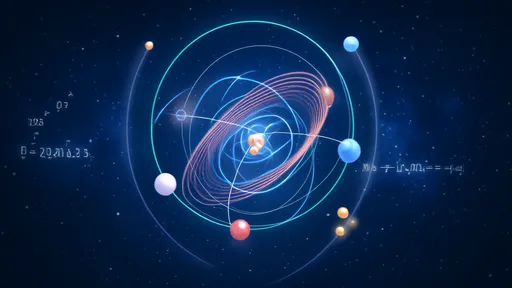
The concept of topological quantum memory is rooted in the study of topological phases of matter, where quantum information is stored not in individual particles but in the global properties of a system. These properties are inherently resistant to local disturbances, making them ideal for preserving quantum coherence over extended periods. By encoding information across nine dimensions, scientists have discovered a way to further insulate data from decoherence and noise, two of the biggest challenges in quantum computing today.
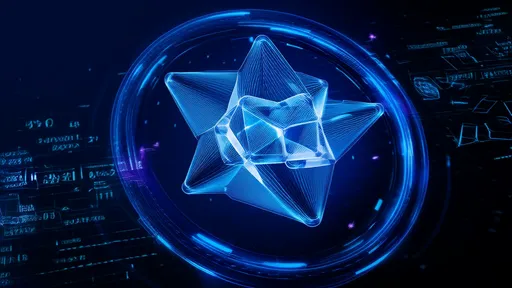
What sets this nine-dimensional encoding apart is its ability to distribute information in a way that no single point of failure can corrupt the entire dataset. Traditional quantum bits, or qubits, are fragile and can easily lose their state due to minor interactions with their surroundings. In contrast, topological quantum memory spreads the information across a complex, multi-dimensional structure, ensuring that even if part of the system is compromised, the rest remains intact. This redundancy is key to achieving fault-tolerant quantum storage.
The implications of this technology are far-reaching, particularly for industries that rely on secure and reliable data storage. From financial institutions to government agencies, the demand for unhackable and noise-resistant memory systems has never been higher. Topological quantum memory could provide a solution, offering a level of security that classical encryption methods simply cannot match. Because the information is encoded in the topology of the system, it cannot be copied or intercepted without altering the underlying structure—a feature that makes it inherently secure against cyber threats.
Despite its promise, the road to practical implementation is not without challenges. Engineering a system that can reliably manipulate and read nine-dimensional states requires advancements in both materials science and quantum control techniques. Researchers are currently exploring exotic materials, such as fractional quantum Hall systems and topological superconductors, to host these complex states. Additionally, developing the algorithms to encode and decode information in such a high-dimensional space remains an active area of study.
Looking ahead, the potential applications of topological quantum memory extend beyond just data storage. Some scientists speculate that it could play a crucial role in the development of quantum networks, where information is transmitted between distant quantum computers. The robustness of nine-dimensional encoding could enable long-distance quantum communication without the need for constant error correction, a significant hurdle in current quantum networking efforts.
As the field progresses, collaborations between theoretical physicists, engineers, and computer scientists will be essential to bring this technology to fruition. While the journey from lab to market may still be years away, the foundational work being done today is laying the groundwork for a future where quantum memory is as reliable and ubiquitous as classical memory is now. For now, the nine-dimensional approach stands as a testament to the ingenuity of researchers striving to overcome the limits of quantum mechanics.
The story of topological quantum memory is still being written, but its early chapters suggest a transformative impact on how we store and protect information in the quantum age. By harnessing the power of higher dimensions, scientists are not just solving technical problems—they’re redefining what’s possible in the realm of information technology.

By /Jul 18, 2025

By /Jul 18, 2025

By /Jul 18, 2025
By /Jul 18, 2025
By /Jul 18, 2025

By /Jul 18, 2025

By /Jul 18, 2025
By /Jul 18, 2025
By /Jul 18, 2025

By /Jul 18, 2025

By /Jul 18, 2025

By /Jul 18, 2025

By /Jul 18, 2025

By /Jul 18, 2025

By /Jul 18, 2025

By /Jul 18, 2025

By /Jul 18, 2025

By /Jul 18, 2025

By /Jul 18, 2025

By /Jul 18, 2025