The realm of sleep science has witnessed a groundbreaking advancement with the emergence of sleep soundwave technology, particularly in the domain of deep sleep phase synchronization. This innovative approach leverages the power of acoustic stimulation to enhance the quality of deep sleep, a critical phase for physical restoration and cognitive function. Researchers and sleep experts are now exploring how precisely calibrated soundwaves can synchronize brainwave patterns, ushering in a new era of sleep optimization.
Deep sleep, also known as slow-wave sleep, is the most restorative stage of the sleep cycle. During this phase, the brain exhibits synchronized neural activity characterized by low-frequency delta waves. The challenge, however, has been to reliably induce and prolong this state, especially for individuals suffering from sleep disorders or high stress. Traditional methods like medication often come with side effects, prompting scientists to seek non-invasive alternatives. Enter the sleep soundwave device—a tool designed to gently guide the brain into deep sleep through auditory cues.
The science behind this technology revolves around the concept of phase synchronization. By delivering specific sound frequencies that mirror the brain's natural delta waves, these devices encourage neural oscillations to align with the desired sleep rhythm. Studies have shown that when external auditory stimuli are precisely timed to coincide with the brain's existing wave patterns, the phenomenon of entrainment occurs. This process effectively "nudges" the brain into a deeper, more synchronized state, enhancing both the duration and quality of deep sleep.
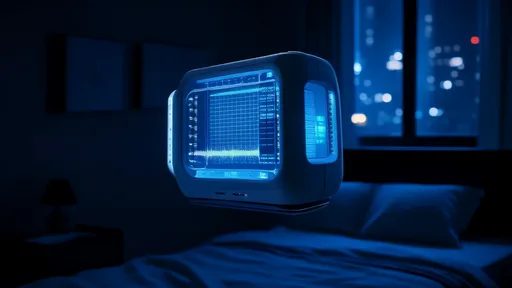
One of the most compelling aspects of sleep soundwave technology is its non-invasive nature. Unlike pharmaceuticals or electrical stimulation, sound-based interventions are gentle and free from adverse effects. Users simply wear headphones or place a small device near their bed, allowing the carefully engineered soundscapes to work their magic. The sounds themselves are often imperceptible or subtly embedded in white noise, making the experience seamless and unobtrusive. For those who struggle with insomnia or fragmented sleep, this could be a game-changer.
Clinical trials have yielded promising results. Participants exposed to phase-synchronized soundwaves demonstrated not only increased deep sleep duration but also improvements in memory consolidation and next-day alertness. These findings suggest that the benefits extend beyond mere sleep quality, potentially impacting overall cognitive health. Moreover, the technology appears to be adaptable to individual needs, with some devices offering personalized frequency adjustments based on real-time brainwave monitoring.
Despite its potential, sleep soundwave technology is not without challenges. The effectiveness can vary depending on individual brain chemistry and environmental factors. For instance, background noise or inconsistent use of the device may diminish results. Additionally, while early studies are encouraging, long-term effects remain under investigation. Researchers emphasize the need for larger, more diverse trials to fully understand the scope of this technology's applications.
Looking ahead, the integration of artificial intelligence could further refine sleep soundwave devices. Imagine a system that continuously learns and adapts to an individual's unique sleep patterns, optimizing sound frequencies in real time. Coupled with advancements in wearable technology, such innovations could make personalized sleep enhancement more accessible than ever. As the science matures, we may see these devices becoming a staple in bedrooms worldwide, offering a natural and effective solution for achieving restorative deep sleep.
The rise of sleep soundwave technology underscores a broader shift toward biohacking and self-optimization. In an era where sleep deprivation is rampant, tools that harness the brain's innate rhythms to promote healing and recovery are invaluable. Whether for athletes seeking peak performance, professionals battling burnout, or anyone yearning for better rest, phase-synchronized soundwaves represent a fascinating frontier in the quest for optimal sleep.

By /Jul 18, 2025

By /Jul 18, 2025
By /Jul 18, 2025
By /Jul 18, 2025

By /Jul 18, 2025

By /Jul 18, 2025
By /Jul 18, 2025

By /Jul 18, 2025

By /Jul 18, 2025

By /Jul 18, 2025

By /Jul 18, 2025
By /Jul 18, 2025

By /Jul 18, 2025

By /Jul 18, 2025

By /Jul 18, 2025
By /Jul 18, 2025
By /Jul 18, 2025

By /Jul 18, 2025

By /Jul 18, 2025

By /Jul 18, 2025