In a groundbreaking development that could revolutionize neuroscience and medical diagnostics, researchers have successfully demonstrated the use of diamond quantum sensors for real-time, nanoscale monitoring of magnetic fields in living brains. This cutting-edge technology promises to unlock unprecedented insights into neural activity at resolutions previously thought impossible.
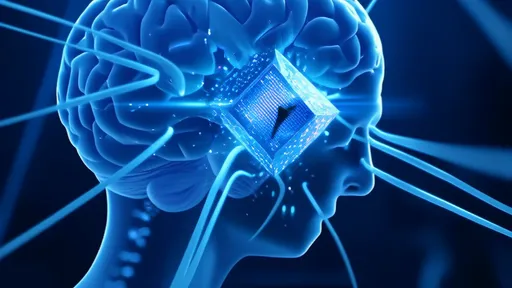
The technique leverages nitrogen-vacancy (NV) centers in diamonds - atomic-scale defects that exhibit remarkable sensitivity to magnetic fields. When implanted near neural tissues, these quantum sensors can detect the extremely weak magnetic fields generated by firing neurons, offering a window into brain function that complements existing methods like fMRI and EEG. What sets this approach apart is its ability to operate at room temperature while maintaining nanoscale spatial resolution, a combination that has long eluded researchers in the field of biomagnetism.
Unlike traditional brain imaging technologies that measure secondary effects of neural activity, diamond quantum sensors directly detect the magnetic fields produced by electrical currents in neurons. This direct measurement approach could provide more accurate and localized information about brain function. Early experiments have already demonstrated the detection of magnetic fields weaker than 1 nanotesla - about a billion times weaker than Earth's magnetic field - with spatial resolution on the order of tens of nanometers.
The implications for neuroscience research are profound. Scientists may soon be able to map neural circuits with unprecedented detail, observing how signals propagate through individual axons and dendrites in living organisms. This could lead to breakthroughs in understanding neurological disorders, from epilepsy to Alzheimer's disease, by revealing malfunctions at the most fundamental levels of neural communication.
Medical applications extend beyond basic research. The technology's potential for non-invasive or minimally invasive monitoring could transform diagnostics for various brain conditions. Imagine being able to detect the earliest signs of Parkinson's disease through subtle changes in specific neural pathways or monitoring the progression of stroke damage in real time. The precision of diamond quantum sensors might even enable new forms of targeted neuromodulation therapies.
One particularly exciting aspect is the technology's compatibility with living systems. Diamond is biologically inert, meaning these sensors can operate within the body without causing tissue damage or significant immune responses. Researchers have already demonstrated successful implantation in animal models, with sensors remaining functional for extended periods while causing minimal disruption to normal neural activity.
The road from laboratory to clinical use still presents challenges. Scaling up the technology for whole-brain monitoring will require developing arrays of thousands or millions of microscopic sensors. Researchers must also refine methods for precisely positioning the sensors near neural structures of interest and develop sophisticated data analysis techniques to interpret the complex magnetic field patterns generated by neural networks.
Despite these hurdles, progress has been remarkably rapid. Several research groups worldwide have reported successful demonstrations of the technology in increasingly complex biological systems. Some teams are working on hybrid approaches that combine diamond quantum sensors with other imaging modalities, while others are developing wireless versions that could enable completely non-invasive monitoring.
As the technology matures, ethical considerations will come to the forefront. The ability to monitor brain activity at such fine scales raises important questions about privacy and potential misuse. The scientific community is already beginning discussions about appropriate guidelines for development and application of these powerful neural monitoring tools.
Looking ahead, diamond quantum sensors represent more than just an incremental improvement in brain imaging. They offer what could be the first practical method for observing the brain's magnetic activity at the scale where fundamental neural computations actually occur. This convergence of quantum physics and neuroscience might well usher in a new era of understanding the most complex organ in the human body.
The coming decade will likely see this technology transition from laboratory curiosity to essential research tool and eventually to clinical application. As researchers continue to refine the sensitivity and scalability of these systems, we may be standing at the threshold of a revolution in how we study, diagnose, and treat disorders of the brain - all enabled by the remarkable quantum properties of imperfections in diamond crystals.

By /Jul 18, 2025
By /Jul 18, 2025

By /Jul 18, 2025
By /Jul 18, 2025

By /Jul 18, 2025
By /Jul 18, 2025

By /Jul 18, 2025

By /Jul 18, 2025

By /Jul 18, 2025

By /Jul 18, 2025

By /Jul 18, 2025

By /Jul 18, 2025

By /Jul 18, 2025

By /Jul 18, 2025

By /Jul 18, 2025

By /Jul 18, 2025
By /Jul 18, 2025

By /Jul 18, 2025

By /Jul 18, 2025

By /Jul 18, 2025